

I do believe AI has already reshaped the entire ecosystem of programming. For the past two decades, most programmers and software engineers have operated within a front-end dominated paradigm—a world where nearly every high-paying job revolved around harvesting attention. The internet economy wasn’t built on truth, knowledge, or engineering depth. It was built on clicks, conversions, dopamine triggers.
We engineered funnels, not foundations.
We optimized ad placement, not algorithmic clarity.
We A/B tested our way into a shallow civilization.
The job of a programmer became:
Make the interface more addictive.
Make the feed more infinite.
Make the metrics grow, even if it meant breaking people.
And in that system, the deep logic of computing, the core craft of systems, was sidelined.
Programming became a rat race of trend-chasing — always building the next feature, the next API, the next retention hook. Not to solve real problems, but to extract more time from users’ lives.
We lost the path.
This is not engineering.
This is digital alchemy for ad merchants.
We didn’t build knowledge machines. We built casinos with good UX.
It reminds me of something a friend once said, back in the time, he just graduated med school. Plastic surgeons were making massive money. And it was a kind of practice, instead of improving lives, simply make women prettier without any medical reason. One day, he warned a junior:
“Don’t go that path. That’s not a doctor. That’s a blood-sucking merchant.”
At the time, I thought he was being dramatic. Now I realize: he was right.
That same transformation happened to us. We went in to become builders of systems… and came out merchants of clicks.
But here’s the turning point.
With AI now rapidly replacing junior programmers—writing interfaces, CRUD apps, landing pages—the old economy of syntax labor is evaporating. What’s left is the question:
What does it mean to be a programmer, when AI can code better than most humans?
The answer isn’t to run faster on the same treadmill.
It’s to stop being a feature factory, and start being a structure designer.
AI can write code.
But AI cannot yet define civilization-level protocols.
It can simulate logic.
But it still lacks judgment about what should be structured, what matters, what scales, and what deserves to exist.
That’s our role now.
We’re being invited—forced, even—to return to the root of programming:
Not front-end scaffolding, but epistemic engineering.
Not attention games, but cognitive infrastructure.
Not ad funnels, but world models.
What Genesis Mission Suddenly Made Me Realize
Something about the Genesis Mission struck me very deeply. It felt like a signal — that maybe we can, or even we should, be part of this.
What is the real problem today?
What does this mission require from computer scientists?
And how can we meaningfully contribute?
To answer that, I went back to the original documents — probably the only authoritative ones available at this moment.
Below is a structured analysis of the White House and DOE texts, and how my own system — Primitive IR → Structure Card → Scheduler — naturally aligns with and attempts to solve these problems.
1. Scientific data is fragmented, incompatible, and non-computable
America’s scientific data is dispersed across agencies, disciplines, and mission areas, making it highly fragmented and difficult to integrate. This fragmentation is compounded by the use of incompatible formats that limit data reuse and interoperability. Moreover, a significant portion of scientific knowledge remains locked in non-computable forms, preventing it from being accessed, interpreted, or acted upon by modern AI systems or machine-driven research workflows.
🔍 How I would address this in my system:
Primitive IR — convert natural language, raw data, logs → into uniform computable primitives
→ solves “non-computable forms”
Seven Primitives (Entities, Events, Actions, Resources, Obligations, Policies, Ledgers)
→ solves cross-disciplinary semantic incompatibility
Structure Cards (functionalized logic units)
→ solves non-composable scientific processes
The Scheduler / Orchestrator
→ solves the inability to chain workflows across domains
The White House frames the issue as fragmented, incompatible, and non-computable.
My answer is: semantic unity, structural unity, execution unity.
When I first designed the Primitive IR layer in my own system, I had a much broader, civilian-oriented scope in mind. I wanted primitives that could support personal management, investment analysis, business operations, inventory systems—basically anything that runs through real-world human contexts. Naturally, those domains require primitives like Entities, Events, Actions, Resources, Obligations, Policies, Ledgers.
But DOE scientific data clearly does not fit into the same primitive vocabulary.
So I asked ChatGPT a simple but foundational question:
“For the majority of DOE scientific data, what are the most uniform, irreducible data elements that could serve as primitives?”
After several hours of intense discussion, this is the structure I arrived at.
If you work in theoretical physics, applied mathematics, computational science, or scientific data systems, I welcome disagreement, corrections, and commentary.
This post is intentionally open—because I believe these primitives might be the key to solving the data-unification problem at the heart of scientific AI.
The Real Problem of Scientific Data Standardization Is This:
What exactly is the Primitive IR of DOE scientific data?
In other words:
What are the smallest, indivisible semantic particles in the universe of unified scientific data?
The answer is not “numbers,” “grids,” or “X-ray images.”
Those are surface-level artifacts.
The real primitives of DOE data are structure primitives—
mathematical structures that arise directly from the physical world.
Primitive IR of DOE Data
= Seven Fundamental Physical Structure Primitives
These primitives are not man-made abstractions.
They are mathematical structures that objectively exist in nature.
Primitive 1: Field
The ontological substrate of all DOE scientific data.
Examples:
Temperature field (T(x,t))
Velocity field (u(x,t))
Electromagnetic field (E(x,t), B(x,t))
Electronic density (\rho(x))
Quantum wavefunction (\psi(x))
Particle concentration (n(x,t))
Every DOE dataset can be reduced to one or more continuous fields.
This is the foundational distinction between scientific data and internet data.
Primitive 2: Operator
Mathematical operations that determine how fields evolve:
Gradient (∇)
Divergence (∇\cdot)
Curl (∇×)
Laplacian (∇^2)
Hamiltonian (H)
Transport operator (\mathcal{T})
Evolution operator (\mathcal{L})
Operators are the mechanistic primitives of nature—
exactly analogous to the Mechanism field inside my Structure Cards.
Primitive 3: Equation / PDE
Fields + Operators + Physical Laws produce a Partial Differential Equation (PDE):
[
\frac{\partial u}{\partial t} = \mathcal{L}(u)
]
$$ \frac{\partial u}{\partial t} = \mathcal{L}(u) $$
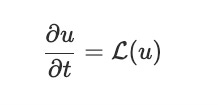
This is the primary generative statement behind DOE scientific data.
All signals produced by large DOE facilities ultimately follow some underlying PDE.
A PDE is the Structure Card of the physical universe.
Primitive 4: Symmetry
Nature does not evolve arbitrarily; it is governed by group-theoretic constraints:
Translational symmetry
Rotational symmetry
Gauge symmetry
Lorentz symmetry
SU(2), SU(3) gauge groups
Reflection / mirror symmetry
Noether symmetries corresponding to conservation laws
DOE experimental data intrinsically carries these structures.
Symmetry is “structural compression” in the physical universe—
the same low-entropy = high-structure principle expressed in my S-index.
Primitive 5: Boundary / Domain
All DOE data originates within a well-defined physical domain:
Tokamak magnetic confinement boundaries
Wind-tunnel geometric boundaries
Periodic crystal-lattice boundaries
Quantum potential-well boundaries
Climate model grid boundaries
These are the Condition primitives of PDE systems.
Primitive 6: Energy Functional
The fundamental driving objective of the system:
DFT energy functional (E[\rho])
Ginzburg–Landau free-energy functional
Lagrangian / Hamiltonian
Potential Energy Surface (PES)
Minimum Energy Path (MEP)
The energy functional is nature’s objective function—
directly analogous to the Goal field in a Structure Card.
Primitive 7: Measurement Operator
DOE instruments do not capture raw field values.
They apply measurement operators:
X-ray: Fourier-domain structure-factor operator
Neutron scattering: operator for (S(q,\omega))
TEM: projection operator
Particle detectors: event-reconstruction operator
Spectrometers: convolution + frequency-domain operators
What we see in the dataset is a projection of the underlying physical field.
This is why DOE data is exceptionally clean, coherent, and structurally uniform.
2. Scientific workflows must become structured, orchestrated, and executable
“AI-ready scientific workflows”
“transform how scientific research is conducted”
White House : Launch of the Genesis Mission (Nov 2025)
Meaning: Transform scientific workflows into AI-ready, machine-actionable pipelines.
When they say represented → organized → executed, that maps directly to:
Language Layer — IR representation
Structure Layer — structure-card organization
Scheduler Layer — orchestrator execution
Or in my framework:
Language → Structure → Scheduler
3. Build a unified, cross-domain data structure layer
secure, unified platform
White House : Launch of the Genesis Mission (Nov 2025)
shared primitives
shared schemas
My corresponding architecture:
Primitive IR (Seven Primitives) → unified semantic layer
Structure Card Schema (six-field structure: Name, Goal, Inputs, Mechanism, Conditions, Outputs)
Structure DNA → unified structural protocol (many protocols must be defined)
This is exactly what I’ve been building.
4. Scientific workflows must be composable
“AI modeling and analysis frameworks, including AI agents to explore design spaces, evaluate experimental outcomes, and automate workflows;
They are describing exactly what I call:
“Orchestrator at the meta-level calling encapsulated, modular logic.”
In other words:
reusable
composable
callable
modular
That is literally the definition of a Structure Card — the smallest callable, schedulable, migratable logic unit.
5. Science needs a computable structural language layer
Modern science requires new frameworks to make data and knowledge machine-interpretable, as the DOE notes. To achieve this, we need systems that can represent scientific concepts and processes in computable, structured forms, rather than in static or ad-hoc formats. The mission’s goal is clear: to enable multi-modal scientific data to be connected and integrated through common representational structures, creating a coherent, computable foundation for AI-accelerated discovery.
6. The Science OS = the orchestrator layer
I think we can establish a goal as creating a “coordinated orchestration layer for scientific models, data, and workflows.” In my system, this orchestration layer is the Scheduler — what I call “the life-layer of the structure universe.” The terminology differs, but the meaning is identical.
This layer is responsible for everything that gives a scientific workflow actual behavior:
metadata routing
tool invocation
workflow governance
feedback loops
multi-agent scheduling
error handling
execution-time logic
This is precisely the direction that modern ADKs and agent frameworks are already converging toward — a unified orchestration layer that animates structured scientific logic.
7. Science must shift from papers → executable structures
Scientific knowledge must shift from static documents to executable, structured artifacts.
Static text → cannot be executed.
Executable structures → can be scheduled, measured, validated.
This is exactly:
IR → Structure Card → Scheduler
In this context:
science → data → workflow
These two views are structurally isomorphic.
Conclusion
Everything the Genesis Mission aims to solve is exactly what I have spent two years building:
Primitive IR → Structure Card → Scheduler
And it can fit into a lot of domains.
White House calls it: “AI-ready scientific workflows.”
I call it: “the civilization of structured language.”
And yes — I truly believe computer scientists can, and should, be part of this transformation.
我真的相信,AI 已经彻底重塑了整个程序员生态。
在过去二十年里,大多数程序员、软件工程师,都在一个由前端逻辑主导的范式里工作——
一个几乎所有高薪岗位都围绕着榨取用户 注意力 的世界。
互联网经济不是建立在真理、知识,或工程深度之上。
它是建立在 点击、转化、和多巴胺触发器 之上。
我们构建的是流量漏斗,而不是科学地基。
我们优化的是广告位置,而不是算法清晰度。
我们用 A/B 测试,把文明一路测试成了一个浅层结构。
程序员的工作变成了:
让界面更上瘾
让信息流更无穷无尽
让指标持续增长——哪怕会让人类变坏
在这个系统里,
计算的深层逻辑、系统工程的核心工艺,被完全边缘化。
编程变成了一个追热点的仓鼠轮——
永远在构建下一个 feature、下一个 API、下一个留存 hook。
目的不是解决真正的问题,而是从人类生活中榨取更多时间。
我们走偏了。
这不是工程。
这是 为广告商服务的数字炼金术。
我们没有构建知识机器。
我们构建的是拥有极佳 UX 的赌场。
这让我想起多年前的一个朋友。
他刚从医学院毕业。当时整形外科特别赚钱,但很多手术并非为了健康,只是为了让女性更漂亮;那已经不算医学了。
有一天,他对一个学弟说:
“不要去那条路。那不是医生,那是吸血商人。”
当时我觉得他说得太夸张。
现在我明白:他是对的。
同样的变化发生在我们身上。
我们原本想成为系统的构建者……
却一步步变成了流量点击的商人。
但现在,拐点来了。
随着 AI 正在快速取代初级程序员——写界面、写 CRUD、写登陆页——
旧的语法劳动力经济正在蒸发。
真正剩下来的问题是:
当 AI 写代码比绝大多数人类更强时,程序员究竟意味着什么?
答案不是在原来的跑步机上加速奔跑。
答案是:
停止当 feature 工厂,开始当结构设计师(Structure Designer)。
AI 会写代码。
但 AI 还不能定义文明级协议。
它可以模拟逻辑,
但还缺乏判断:
什么值得结构化?
什么重要?
什么能扩展?
什么应该存在?
这正是我们现在的角色。
我们被邀请——甚至被迫——回到编程的根部:
不是前端脚手架,而是 认知工程(epistemic engineering)。
不是注意力游戏,而是 认知基础设施。
不是广告漏斗,而是 世界模型。
Genesis Mission 给我的巨大震撼
Genesis Mission 让我突然意识到,这可能是一个信号——
也许 我们可以,甚至 我们就应该 成为其中的一部分。
当代真正的问题是什么?
这个任务需要什么样的计算机科学家?
我们能做什么?
为了回答这些问题,我回到了 最初的原始文件——
目前可能也是唯一权威的来源。
下面是对白宫与 DOE 文本的结构化分析,
以及 我自己的体系(Primitive IR → Structure Card → Scheduler)如何天然映射并解决这些问题。
1. 科学数据是碎片化的、不兼容的、不可计算的
美国的科学数据分散在不同机构、不同学科、不同任务线中,
高度碎片化,难以整合。
这种碎片化又被“不兼容的数据格式”进一步放大,使得数据无法复用、无法互操作。
更重要的是,大量科学知识依然锁定在“不可计算形态”里——
无法被现代 AI 系统访问、理解或执行。
🔍 我的系统如何解决:
Primitive IR
将自然语言、原始数据、日志 → 转换成统一可计算原语
→ 解决 不可计算形式
七原语(实体、事件、行为、资源、义务、政策、账本)
→ 解决 跨学科语义不兼容
结构卡(可函数化逻辑单元)
→ 解决 科学流程不可组合
调度器 / Orchestrator
→ 解决 跨领域流程无法串接
白宫定义的问题是碎片化、不兼容、不可计算。
我的答案是:
语义统一 → 结构统一 → 执行统一。
在我最初设计 Primitive IR 时,我的目标其实完全是民用领域:
个人管理、投资分析、企业运行、库存系统……
因此最初的 primitive 是为现实生活设计的:
实体、事件、行为、资源、义务、政策、账本。
但 DOE 科学数据显然 不适用同一套原语体系。
所以我问了 ChatGPT 一个基础且决定性的提问:
“DOE 的科学数据,最统一、最不可再分的语义原子是什么?”
经过几个小时的推演,我得到了如下结构。
科学数据标准化最核心的问题是:
DOE 科学数据的 Primitive IR 究竟是什么?
换句话说:
什么是科学宇宙的最小语义粒子?
答案不是“数字”“网格”“X-ray 图像”。
那些只是表层产物。
真正的原语是 物理世界天然携带的结构原语(Structure Primitives)。
DOE 的科学 Primitive IR = 七个物理结构原语
它们不是人造抽象,
而是自然界中客观存在的数学结构。
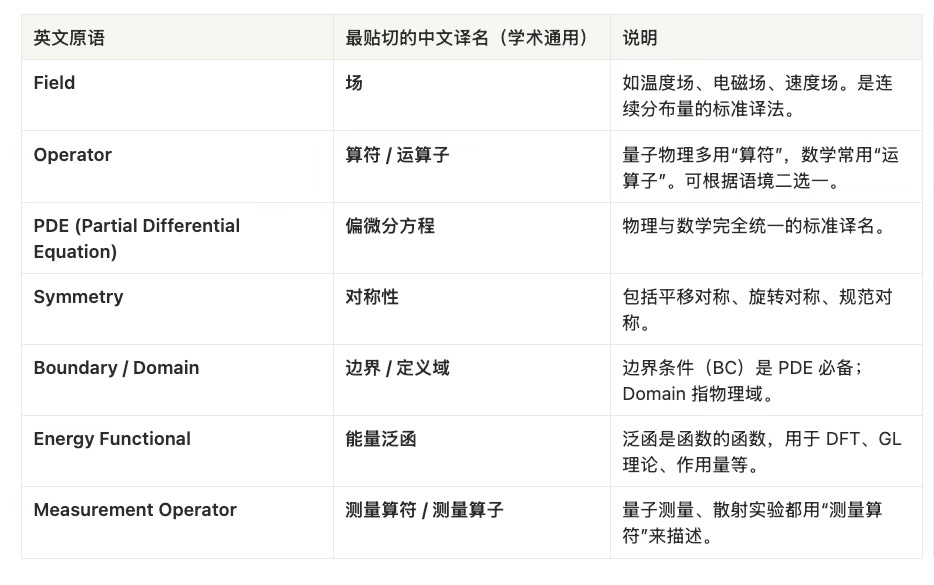
(Field, Operator, PDE, Symmetry, Boundary, Energy Functional, Measurement Operator, 这个部分我没有完全翻译,英文部分其实已经很完整了。)
2. 科学流程必须结构化、可编排、可执行
白宫明确提出:
“AI-ready scientific workflows”
“transform how scientific research is conducted”
这意味着要把科学流程升级为 AI 可执行管线。
也就是:
IR(表示)
Structure(组织)
Scheduler(执行)
在我的体系里:
Language → Structure → Scheduler
3. 必须建立跨领域统一的数据结构层
白宫提出:
“secure, unified platform”
并在上下文强调:
共享原语
共享结构
共享标准
我的对应体系:
Primitive IR(七原语)
结构卡 Schema(六字段)
Structure DNA(结构协议)
这正是我两年来构建的。
4. 科学流程必须可组合
白宫文件中写到:
AI modeling & analysis frameworks, including AI agents… automate workflows
这正是我所说的:
“由 orchestrator 调用封装、可迁移、可组合的模块化逻辑。”
而这完全就是结构卡的定义。
5. 科学需要一个可计算的结构语言层
现代科学需要新的框架,让数据与知识变成 machine-interpretable。
要实现这一点,我们需要将科学概念、科学过程转化为
可计算、可结构化的形式。
这就是 “common representational structures” 的使命。
这正对应:
Primitive IR(世界输入结构化)
Structure Cards(认知与执行结构化)
Scheduler(结构与时间的闭环)
6. Science OS = 调度器层
创建一个:
“coordinated orchestration layer for scientific models, data, and workflows.”
在我的系统里,这一层就是:
调度器(Scheduler)=结构宇宙的生命层
负责:
元数据路由
工具调用
流程治理
反馈回路
多智能体调度
错误处理
执行时逻辑
这也是所有现代 ADK 和 agent 框架正在趋近的目标。
7. 科学必须从论文 → 可执行结构
静态文本无法执行。
结构化执行体可以调度、测量、验证。
这正是:
IR → Structure Card → Scheduler
换个科学语境:
science → data → workflow
两者结构同构。
结语
Genesis Mission 想解决的所有问题,
正是我过去两年构建的体系:
Primitive IR → Structure Card → Scheduler
白宫称这叫:
“AI-ready scientific workflows”
我称之为:
“结构语言文明。”
而我确实相信:
程序员不仅可以参与,而且应当参与这场科学文明的重建。
很有感染力,给了程序员前进的方向